


Dr. Eboni Green
August 3, 2021
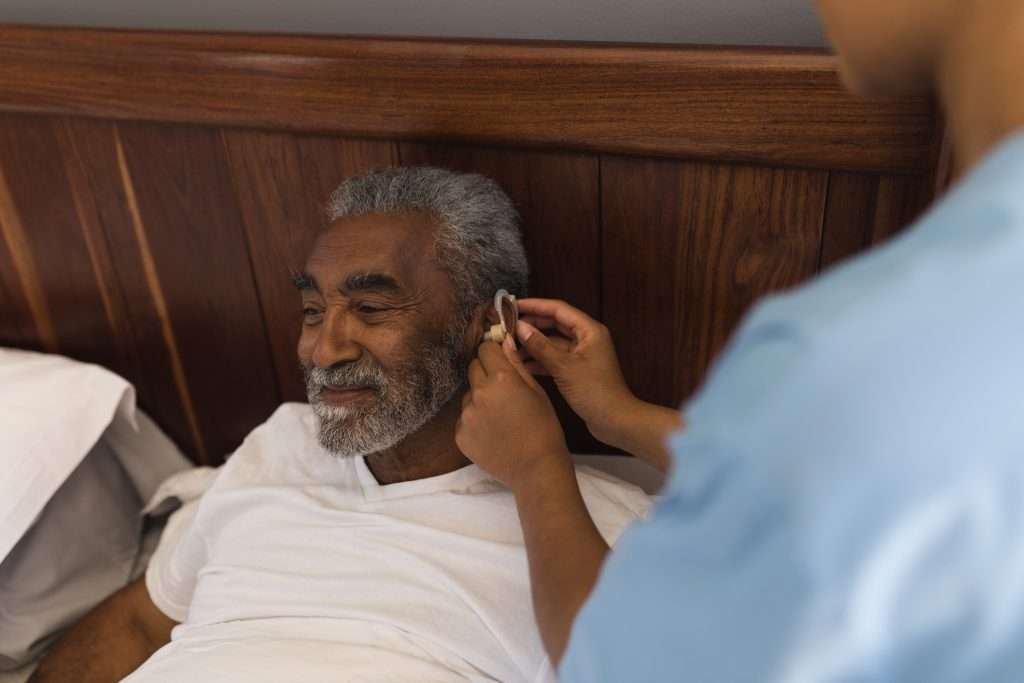
When left untreated, hearing loss can result in feelings of confusion, embarrassment, isolation and depression, and affected individuals are not always immediately aware of their hearing loss. They may blame others for talking too softly or mumbling, and gradually withdraw from challenging social activities.
It is important for anyone caring for someone suffering with hearing loss to assist them in seeking help, providing essential emotional support while they take steps to treating their condition and improving the quality of their life.
Begin by encouraging them to request a referral from their physician to see a certified audiologist for a hearing evaluation. Providing they have Medicare, this referral will enable them to access Medicare coverage for the test.
Audiologists provide professional medical care in the identification, diagnosis and treatment of auditory disorders related to hearing, balance and other conditions. You can find a local audiologist by searching on the American Speech, Language and Hearing Association (ASHA) website.
Assist your loved one in preparing for their first appointment by considering their answers to the following:
During their first appointment share all this information, as well as any concerns regarding their withdrawal from social activities or regular bouts of confusion or unsteadiness. Be prepared for understandable sadness upon your loved one being diagnosed with a hearing impairment.
Following a diagnosis of hearing loss, the audiologist will develop a plan for your loved one’s hearing rehabilitation. This may include prescribing the use of hearing aids or other hearing assistive technology.
Audiologist-prescribed hearing aids are FDA-approved electronic devices that collect and amplify sound, and direct it into the ear. They will be custom-made to meet your loved one’s particular hearing loss needs. The rehabilitation plan will also include education for both you and your loved one with regards to how to operate, clean and otherwise care for their new hearing aids.
The cost of hearing aids can vary, and a higher price-point does not necessarily mean that it is a better choice for your loved one – the audiologist will make recommendations as to which types will be the best fit for their needs, as well as any budgetary constraints.
It is also possible to purchase hearing aids online, which may prove to be a more convenient and less expensive option. There are lots of positive MDHearingAid reviews, but it’s important to shop around to find out which hearing aids will suit your needs.
It is true that shopping online for hearing aids may lack the customizability required for optimal efficacy, but for some, they are an effective alternative that may save on money and repeated fitting visits. Talk the option through with the audiologist.
It’s important to understand that hearing aids do not cure hearing loss, so it’s a good idea to encourage your loved one to talk about their expectations with the audiologist.
The audiologist will program their new hearing aids, customizing the way they perform to best suit their needs. It is typically necessary for several follow-up appointments during which the audiologist can fine-tune the hearing aid programming to further improve their functionality.
Also known as Personal Sound Amplification Products (PSAPS), over-the-counter listening devices are not hearing aids, yet they feature the same components – a microphone, an amplifier, a receiver and small batteries.
These over-the-counter (OTC) options are not currently regulated by the FDA, so their effectiveness and quality can not be assured, and they cannot be customized to best fit the needs of your loved one. New regulations are in the pipeline to improve access to OTC hearing aids, but as yet, there has been no change to their requirement for FDA approval.
Patience and good listening skills are key in supporting them through their diagnosis. Here are some other important things you can do:
Final thoughts
Supporting someone through their hearing loss diagnosis is challenging, but there are many things that you can do to help them.
It’s also important to recognize that, depending upon the circumstances, it may be a difficult transition emotionally for you too, and exercising such patience and understanding can be overwhelming at times. Ensure that you take the time to nurture your own needs and process the change for yourself, too.