
Dr. Eboni Green
August 14, 2026
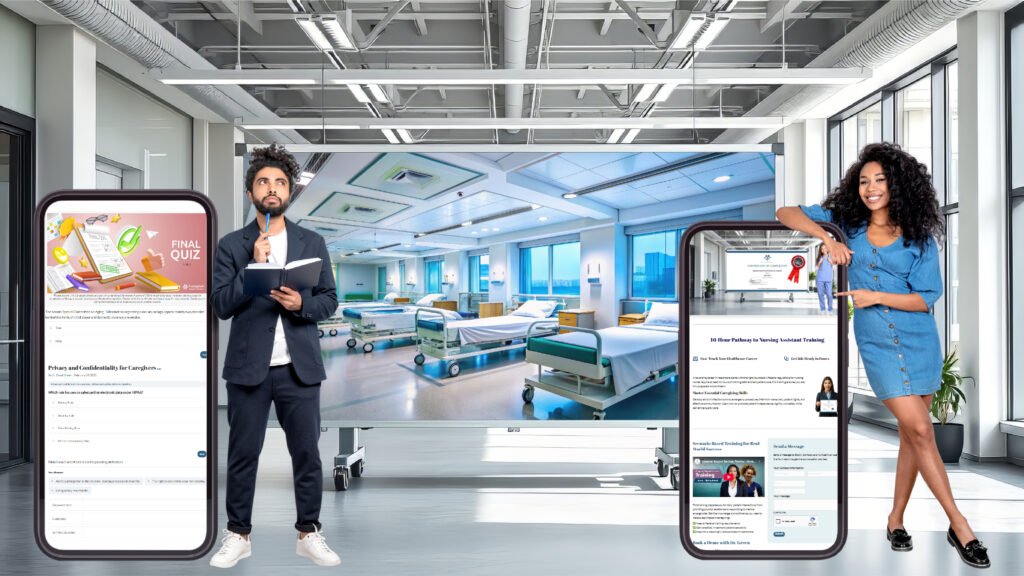
Caregiver training and essential skills are now more important than ever as caregiving has evolved beyond companionship. Today’s caregivers need a blend of medical knowledge, technical ability, and deep empathy to succeed on the front lines of healthcare.
This guide covers the essential training and skills for a rewarding career, from foundational certifications to crucial soft skills, highlighting how caregiving can serve as a strong foundation for healthcare.
A solid educational foundation is the essential first step. Formal training and certifications are non-negotiable because they equip you with necessary skills and ensure you meet legal standards. Any good guide to becoming a caregiver will emphasize these core qualifications.
Common and valuable certifications include:
Certified Nursing Assistant (CNA) is often an entry point into a healthcare career. Programs cover patient care essentials such as vital signs, mobility assistance, and personal hygiene. This certification is widely recognized and required in many facilities.
Getting these credentials through comprehensive caregiver training shows your competence and commitment.
Once you master the fundamentals, develop specialized skills. Client needs are diverse, and caregivers with expertise in specific areas are in high demand. Specialization makes you more effective and opens up new professional opportunities.
Consider pursuing training in areas such as:
Many clients have chronic conditions like diabetes or heart disease. Managing these conditions can provide a strong foundation for healthcare careers. Specialized knowledge helps you assist patients in managing symptoms and following treatment plans.
These skills show a dedication that employers and clients value.

Technical skills are vital, but they’re only half the equation. The best caregivers combine their knowledge with strong soft skills. These interpersonal attributes help you connect with clients, build trust and provide compassionate care. They are often what separate a good caregiver from a great one.
Key soft skills to cultivate include:
These skills develop with experience and a desire to help others.
The healthcare field is always changing with new research and technologies. A commitment to lifelong learning is essential for any caregiver who wants to provide the best care and have a long career. Stagnation isn’t an option in a field that evolves so quickly.
Continuous learning keeps your skills relevant and ensures patients receive care based on current standards. Most certifications, such as CNA and HHA, require continuing education units (CEUs) for renewal.
You can earn CEUs and expand your knowledge through:
Embracing continuing education demonstrates a professional dedication that will set you apart.
Modern caregiving is integrated with technology, which can enhance care, improve safety and increase efficiency. A modern caregiver must be comfortable with a range of digital tools, as familiarity with technology is no longer optional.
Common examples include:
Learning these tools helps you work more efficiently and provides a higher level of safety for the person in your care.
A career in caregiving is a path of constant learning. A strong foundation of formal training, specialized knowledge, soft skills and technology will help you provide exceptional care. This commitment leads to a fulfilling and successful professional life.